Topic 1: Production Process of High-Pressure Water Tank: Each Step Is Crafted with Care
Engineer’s professional design: Sketching the foundation of safety
The development of Hengrui high-pressure water tanks began with the meticulous design by a professional engineering team. The team, leveraging their extensive experience across various industries, combined principles of fluid mechanics and pressure-bearing structures to customize anti-vibration and high-pressure-resistant tank solutions for different usage environments. From the design drawings to the production and manufacturing of the products, every detail was ensured to meet the demanding requirements of the working conditions.
Selection of high-quality materials: Building the foundation of quality
Selected 304/316L stainless steel is used as the inner tank material, ensuring water quality safety with its anti-corrosion and anti-scaling properties from the very beginning. The outer shell is made of high-quality coated sheet and laminated sheet, which has passed strict salt spray tests (simulating extreme environments such as marine climates) and metal fatigue tests, guaranteeing a corrosion resistance lifespan of over 10 years. The insulation layer uses environmentally friendly high-density materials, reducing heat loss by 30% compared to traditional processes.
Automated process: Millimeter-level precision control
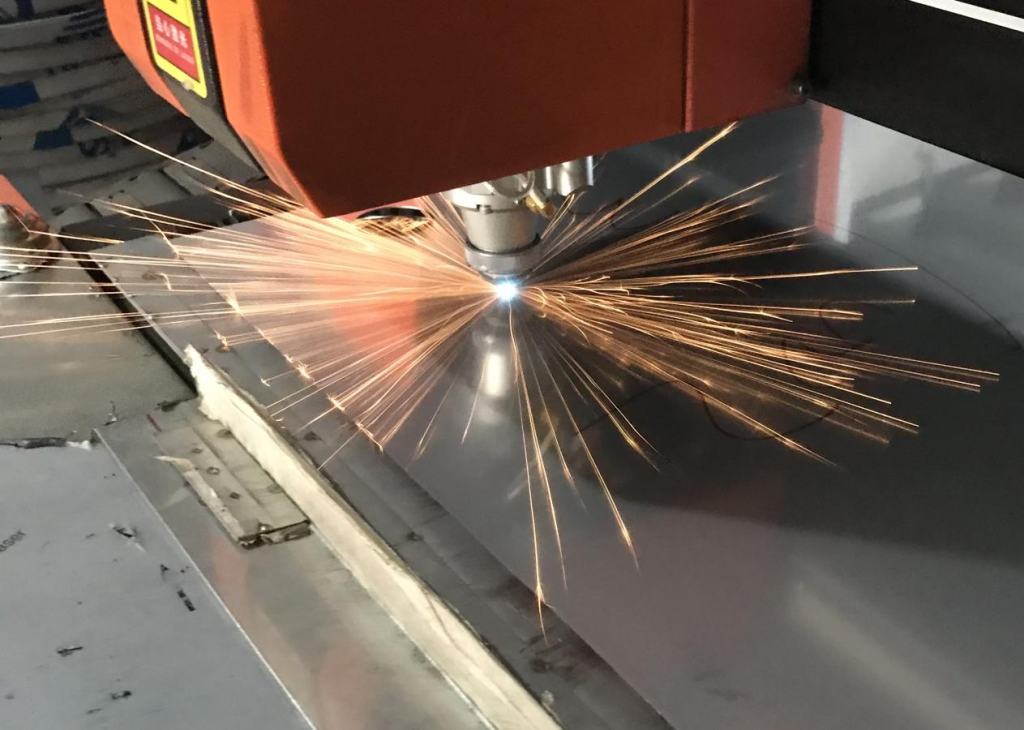
Laser drilling: Utilizing a large-scale CNC laser cutting machine, the holes are automatically positioned according to the drawings, with an error control within ±1mm, ensuring precise connection of the interfaces.
Rolling and Flanging: The plate is uniformly shaped through a hydraulic rolling machine, and the flanging process at the joint enhances the welding strength.
Automatic welding: Both straight seams and circumferential seams are welded using the robotic arm. Combined with the special welding materials suitable for the plates, the weld strength reaches over 95% of the base material, eliminating the risk of leakage.
Welding of the coil and the top cover: The built-in 316L stainless steel coil is fixed by automatic welding, while the top cover is made using a seamless welding process to ensure overall sealing.
Strict testing and delivery: Each unit has undergone “stress testing”
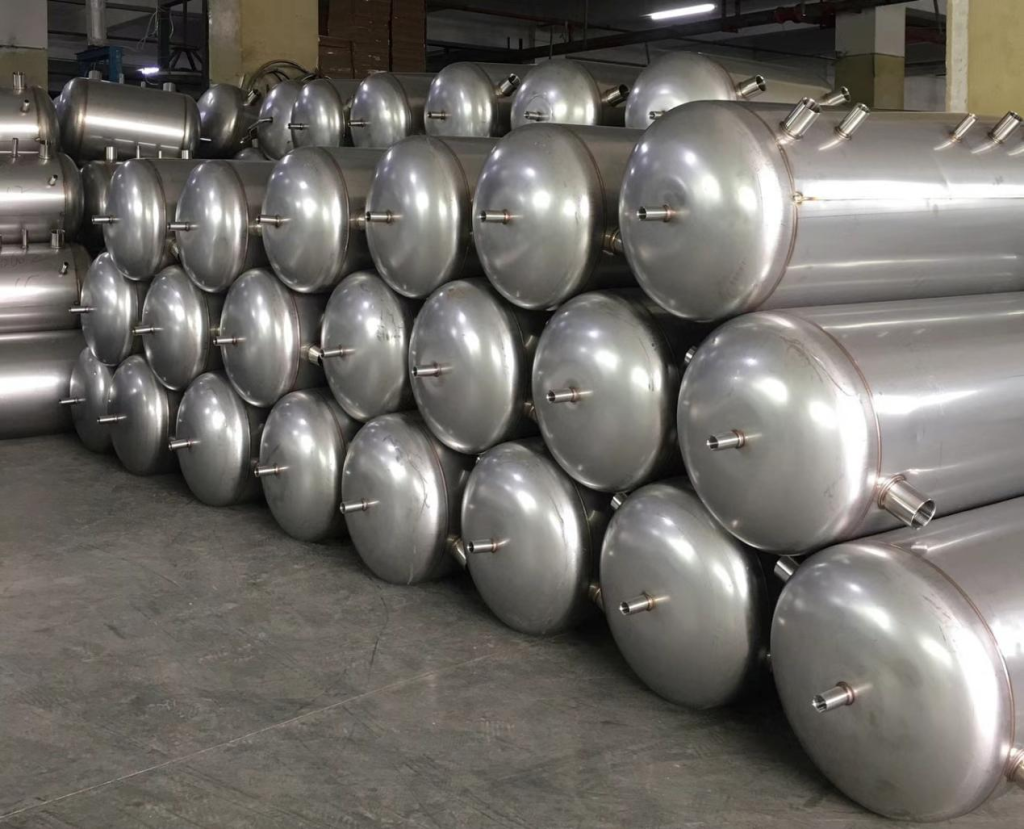
The inner liner must pass a pressure test higher than the national standard (with a static pressure test at 1.5 times the rated pressure). After the insulation layer operation, a 24-hour constant temperature test is conducted. Finally, it is labeled and packaged, and then dispatched for loading onto vehicles. The entire process consists of 13 procedures that are traceable throughout, ensuring that the delivered products have zero defects.