
Topic 4: Hengrui High-Pressure Water Tank: Comprehensive Quality Control from Materials to Processes
In the manufacturing of vehicle high-pressure water tanks, quality control is carried out throughout every stage from material selection to delivery. Hengrui has established a “three-inspection system” (incoming material inspection, process inspection, and final inspection) to ensure product quality through scientific procedures:
Incoming material inspection: Reject “non-conforming products from entering the site”
Stainless steel sheet: For each batch, verify the material certificate (including the content of elements such as C, Cr, Ni, etc.), and take samples for spectral analysis to ensure that the composition of 304/316L meets the standards;
Insulation material: Test the thermal conductivity (≤ 0.03 W/m・K) and the flame retardant grade (V-0 level), and prevent the entry of inferior foams.
Welding materials: Verify the compatibility between the welding material grade and the sheet material, and conduct mechanical property tests on the deposited metal for each batch.
- Process Control: Millimeter-level Error Management
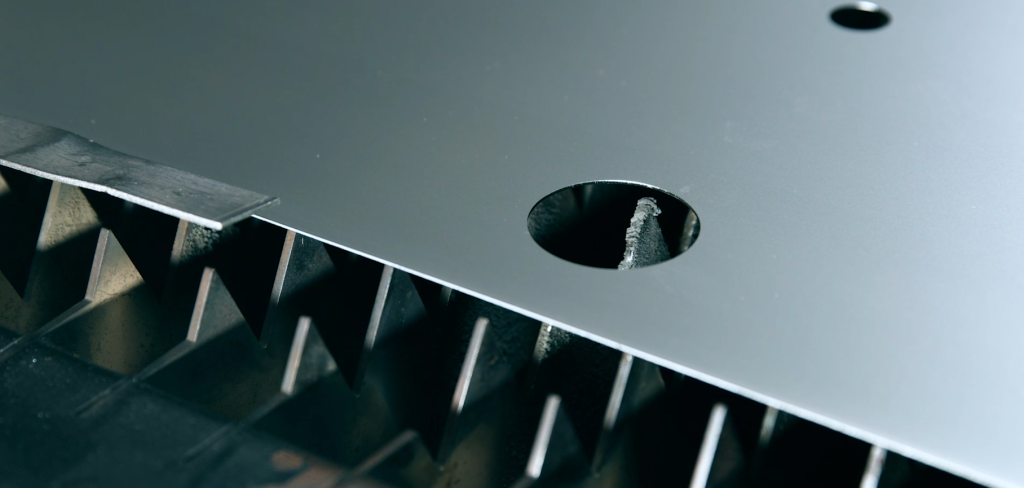
Laser drilling: The system scans the coordinates of the hole position in real time through the visual detection system, and automatically alerts in case of any deviation.
Welding process: Current and voltage monitoring devices are installed on each equipment, and welding parameters are uploaded to the MES system in real time, forming a traceable data chain.
Insulation layer: Utilizing the Italian OMS foaming equipment, the foaming density is controlled at 40-45 kg/m³, ensuring a closed-cell ratio of over 95% and maintaining stable insulation performance.
- Factory Testing: Exceeding Industry Standards “Pressure Threshold”
Water pressure test: Fill the inner tank with water up to 1.5 times the rated pressure (if the rated pressure is 4 MPa, then the test pressure is 6 MPa), and maintain the pressure for 30 minutes without any leakage.
Air tightness test: Inject 0.8 MPa compressed air into the system, place it in the water tank to detect bubbles. The leakage volume should be ≤ 5 ml/min for it to be considered qualified.
Simulation condition test: Place the water tank in the environmental chamber and cycle it between -40℃ and 120℃ for 1000 times to verify the sealing performance under thermal expansion and contraction.
With its complete chain quality control system, Hengrui’s high-pressure water tank achieved 100 million kilometers of trouble-free operation in the test rig of a certain heavy truck manufacturer, far exceeding the industry average of 6 million kilometers.