
Topic 3: Quality Assurance Unveiled: The “Salt Spray Test” for Stainless Steel Sheets
The corrosion resistance of the high-pressure water tank is a key indicator in the automotive environment. Hengrui conducted rigorous salt spray tests on 304/316L stainless steel inner tank plates to verify the reliability of the material under extreme conditions:
Test standard: Simulation of extreme environment
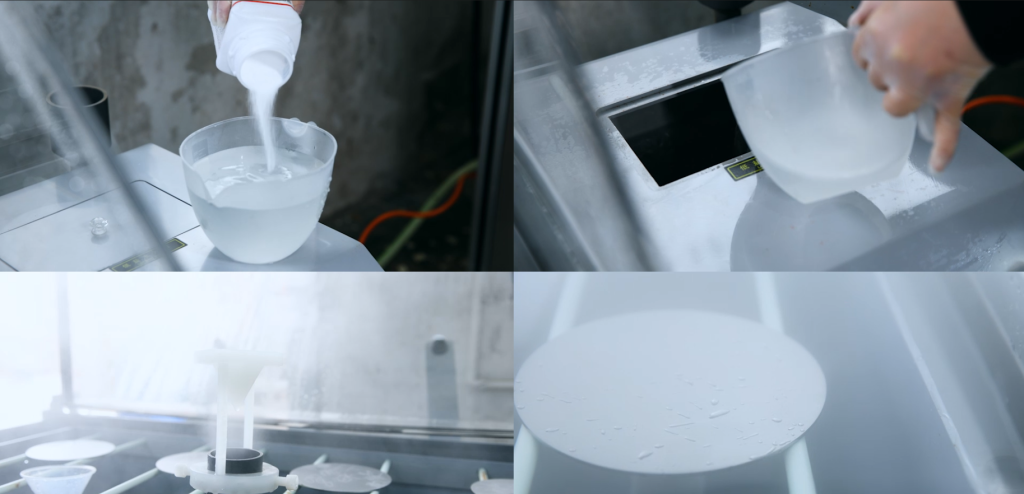
According to the GB/T 10125-2021 standard “Artificial Atmosphere Corrosion Test – Salt Spray Test”, the sheet samples were placed in a salt spray box containing a 5% concentration of sodium chloride solution at 35℃, and were sprayed continuously for 720 hours (equivalent to 10 years of use in a seaside environment). During the process, the surface of the samples was observed every 24 hours, and the corrosion rate and the formation of rust spots were recorded.
Material characteristics: The “anti-corrosion code” of 316L
The test results show:
After 720 hours of salt spray treatment, the surface of the 304 stainless steel sample only showed a slight oxide film, without any penetrating corrosion.
The 316L stainless steel (containing molybdenum) sample showed almost no significant changes, with a corrosion rate of less than 0.01mm per year, which is much better than the 0.1mm per year of ordinary carbon steel.
This is attributed to the passivation film formed by the molybdenum element in the 316L steel, which can effectively resist the erosion of chloride ions (such as road deicing salt, sea fog) and is particularly suitable for vehicle use in northern winters and coastal areas.
Extended Test: Metal Fatigue and Compressive Strength Limit
In addition to the salt spray test, the sheet material also needs to pass the tensile test (yield strength ≥ 205 MPa) and the water pressure burst test (burst pressure ≥ 8 MPa) to ensure that it does not crack under high and low temperature cycles (-40℃ to 120℃) and vibration conditions. Each batch of materials comes with a third-party test report, which prevents inferior materials from entering the production process from the source.